Home Organization Systems That Actually Work for Neurodiverse Families
If you've ever set up a "perfect" organizational system only to watch it fall apart within a week, you're not alone. For neurodiverse families, traditional organizing advice often misses the mark entirely. Systems built around neurotypical assumptions — like "just put it back where it belongs" or "out of sight, out of mind" — can feel impossible to maintain when your brain is wired differently.
The good news? Organization is a skill, not a personality trait. And when you build systems around how your family actually thinks and moves through your home, everything changes.
Here are three practical systems that work with neurodiverse brains, not against them.
Open Storage and Visual Access
For many neurodiverse individuals, the phrase "put it away" translates to "make it disappear forever." If something is hidden behind a cabinet door or tucked inside a closed bin, it effectively stops existing. This isn't carelessness — it's simply how the brain processes what it can and can't see.
What to do instead:
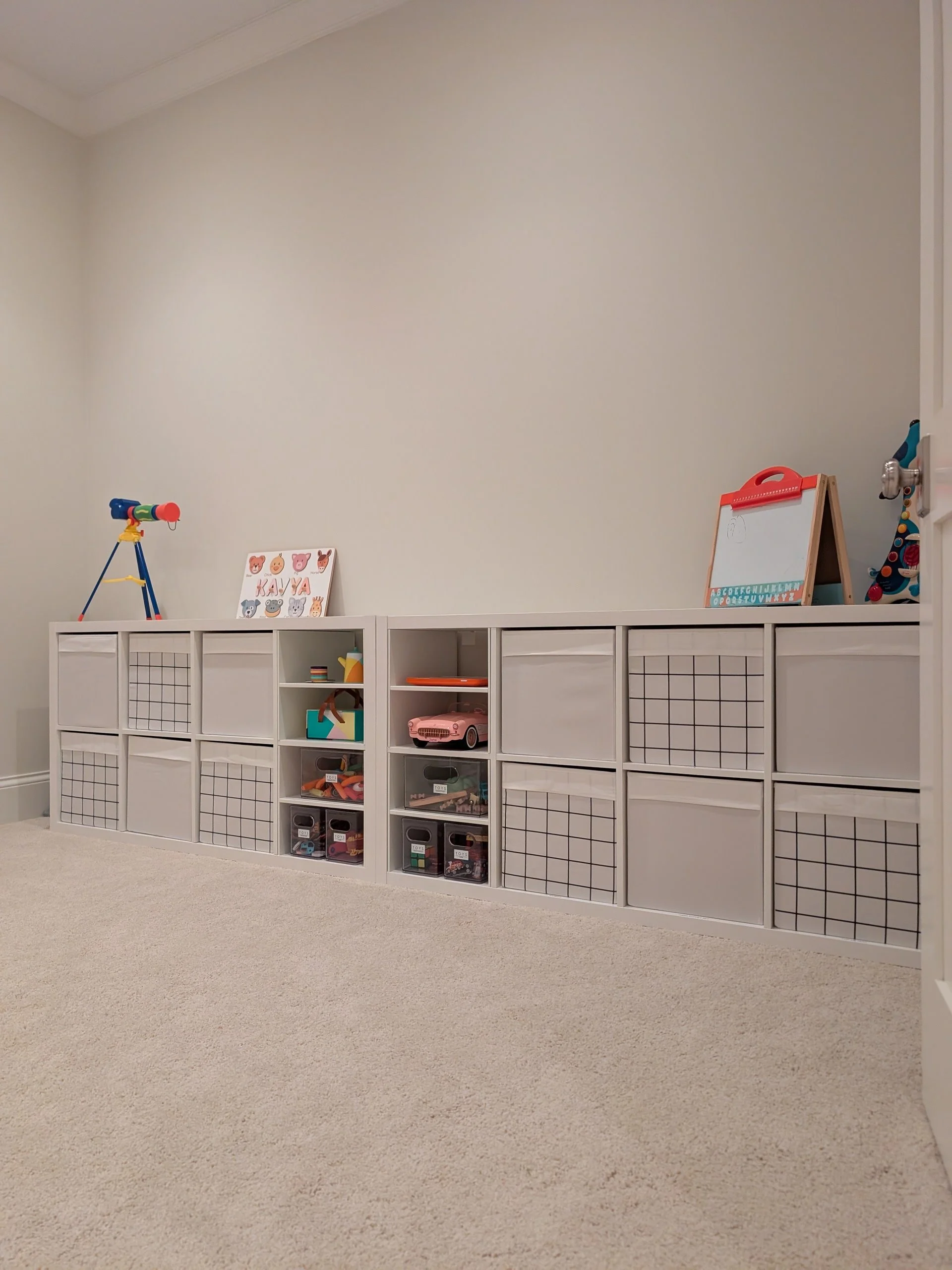
Replace closed storage with open shelving, clear bins, and visible containers wherever possible. Label everything with both words and pictures (especially helpful for kids who are still reading or who process visually). Keep frequently used items at eye level and within arm's reach so the path of least resistance leads to the right behavior.
A simple swap like trading an opaque toy chest for a set of labeled open bins can dramatically reduce clutter — because everyone can actually find and return things without effort.
Zones Built Around Routines, Not Rooms
Traditional home organization assigns items to rooms: coats in the closet, shoes by the door, homework at the desk. But neurodiverse families often move through the home in patterns that don't follow those rules — and that's okay.
The smarter approach is to build zones around what your family actually does, not what you think they should do.
What to do instead:
Walk through your family's real daily routine and notice where things land naturally. Backpacks dropped at the couch? Create a homework launch pad right there. Shoes kicked off in the hallway? Put a small basket in the hallway. Instead of fighting natural patterns, build a system that supports them.
This approach reduces the mental load of "remembering" where things go, because the zone is already where life is happening.
Reset Rituals, Not Cleaning Sessions
Asking a neurodiverse child (or adult) to "go clean up" is often overwhelming because the task has no defined start, end, or scope. Open-ended cleaning requires executive function skills — planning, prioritization, task initiation — that can be genuinely difficult to access.
Breaking the day into short, predictable reset moments is far more sustainable than one big cleanup.
What to do instead:
Identify two or three natural transition points in your day (after school, before dinner, before bed) and attach a 5-10 minute reset to each one. Use a visual checklist, a timer, or even a short playlist to make the task feel bounded and doable. When a child knows exactly what "clean up" means and how long it will take, they are far more likely to follow through without resistance.
Consistency matters more than perfection here. A quick daily reset beats a massive weekend overhaul every time.
The Bottom Line
Your family does not need to fit into a one-size-fits-all organizing mold. The right system is the one that works for your brains, your routines, and your home.
Ready to build a system that finally sticks? Visit thecluttercurator.com to learn more or book a consultation.